Using AI
What Makes an AI Task Easy or Hard?
AI tasks become easier when context is visible, success is clear and results are testable. Hidden dependencies and exact constraints make them harder.
Read experimentLearn how prompting, examples, task boundaries, and conversation context change the quality of AI-assisted work. Start with the practical habits that made our own projects more dependable.
Too many AI instructions can create conflicts and hide priorities. We learned when detailed prompting helps—and when complexity starts hurting results.
Read the starting experimentAI tasks become easier when context is visible, success is clear and results are testable. Hidden dependencies and exact constraints make them harder.
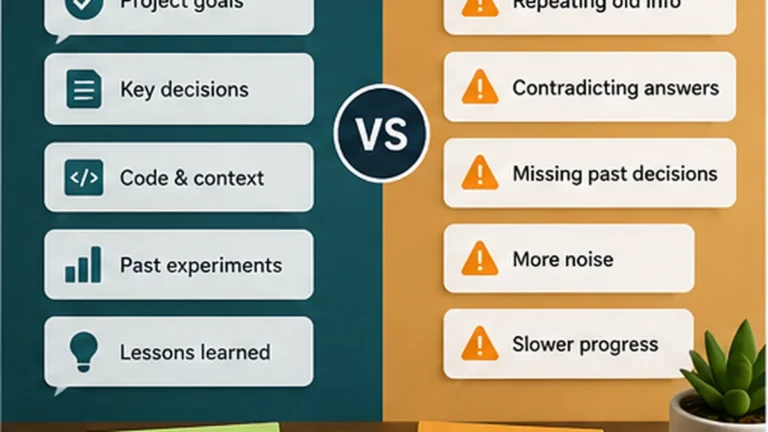
Read experimentLong AI chats preserve useful context but can also accumulate obsolete decisions and noise. Here's when we keep the conversation and when we start fresh.
Read experimentLonger AI prompts can add useful context, but length itself doesn't improve the answer. We found relevance and clarity matter much more than prompt size.
Read experimentBreaking a complex AI task into stages can improve control and verification, but too many stages create overhead. Here's where we found the balance.
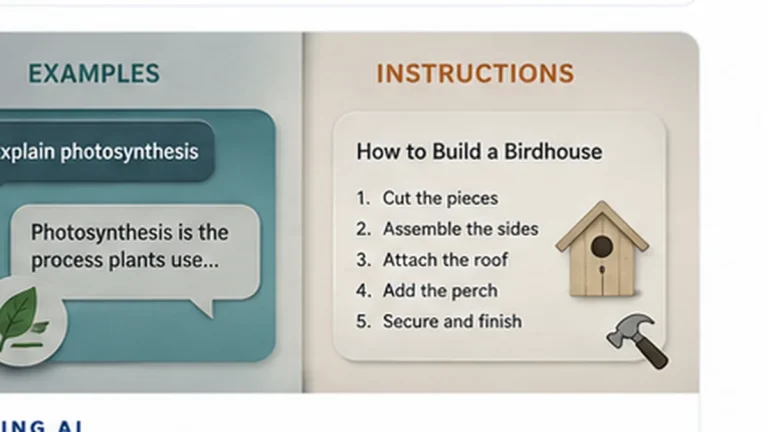
Read experimentExamples can communicate qualities that are difficult to describe, but copying them too literally creates new problems. Here's how we use examples with AI.
Read experiment