What is AI actually good at?
Where AI consistently saved time or improved the work.
ExploreWhat AI does well. Where it fails. What we learn after the prompts, revisions, broken workflows, inconsistent images, coding fixes, research projects, and real-world tests.
Worthy Trying is organized around the questions that kept appearing while we used AI on actual work.
Where AI consistently saved time or improved the work.
ExploreThe mistakes and limitations that kept returning.
ExplorePrompting, context, task design and practical use.
ExploreVerification, self-review and confident errors.
ExploreWriting quality, SEO, scope and reader value.
ExploreConsistency, factual visuals and reusable design assets.
ExploreCoding, debugging, regressions and QA.
ExploreWorthy Trying explores what happens when artificial intelligence moves beyond the demo and gets used on real projects. We test AI for writing, research, coding, image generation, design, problem-solving, and longer workflows where a convincing first answer is not necessarily a reliable result.
The goal is not to prove that AI is good or bad. It is to find out where it genuinely helps, where it fails, and what makes the difference. Can AI-generated code actually work? Can an image generator maintain a consistent design across multiple images? Can AI research be trusted without checking its sources? Can an AI writing workflow produce useful content without introducing errors, repetition, or unnecessary work?
Those questions lead us into practical AI reliability, verification, workflow design, and the mistakes that often do not become obvious until AI is used on something real.
Our articles and experiments come from using AI to accomplish actual tasks. When something works, we examine why. When it fails, we document the failure and what it took to correct it. When the result is mixed, we do not turn it into a success story just because AI was involved.
Across Worthy Trying, you will find practical lessons about AI writing, AI coding, AI-generated images, research, reliability, troubleshooting, and AI workflows, along with the individual projects that produced those lessons. The objective is simple: help you understand not just what AI can do, but what you can reasonably expect when you try to use it yourself.
We do the work first. The articles come from what the work teaches us. Successful, mixed, and failed results can all be useful when the evidence is explained honestly.
Prompting, task structure, examples, and conversation context.
Browse topicSelf-review, repeated mistakes, unintended changes, confident errors, and verification.
Browse topicLong projects, standards, sources of truth, bloat, scaling, and restart decisions.
Browse topicContent quality, article scope, search intent, content gaps, internal linking, and publishing restraint.
Browse topicVisual consistency, reusable assets, image-first workflows, advertising, and factual image accuracy.
Browse topicWebsite debugging, code generation, modification, error analysis, and regression control.
Browse topicConstruction, business research, synthesis, testing, and action plans.
Browse topicThe newest lessons added to the Worthy Trying network.
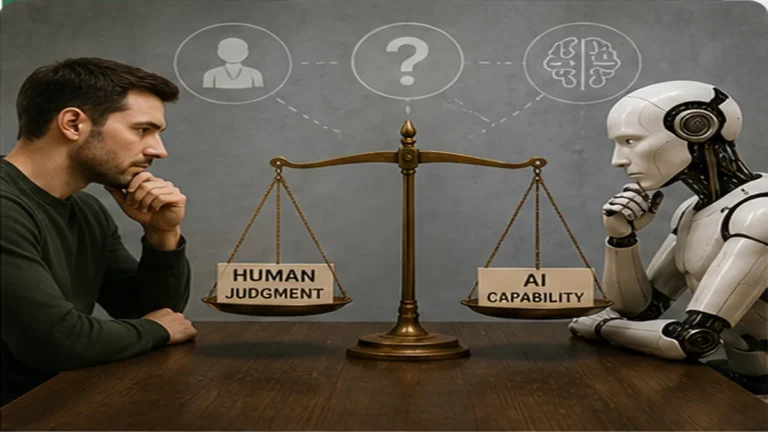
Use consequence, testability, context, reversibility and judgment to decide whether AI should do a task, assist a human, or stay out of the critical decision.
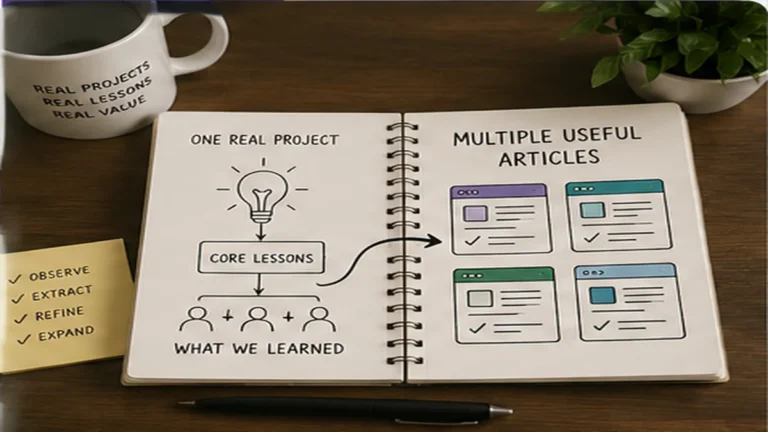
Read experimentOur best article ideas came from real projects. The trick is extracting distinct lessons, not splitting one story into keyword variations.
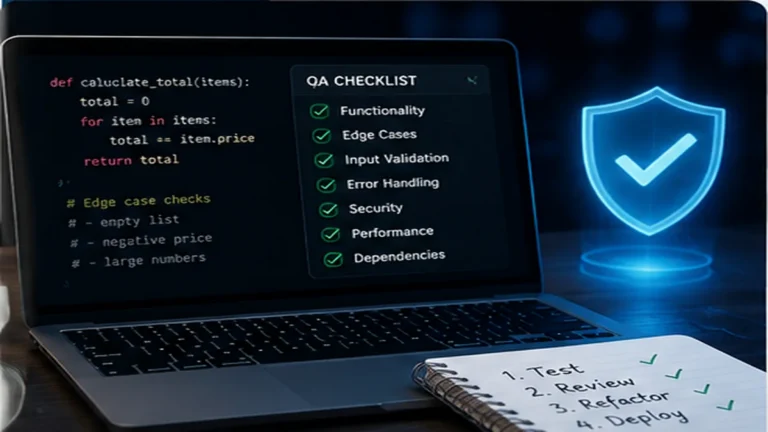
Read experimentAI-generated code should pass functional, regression, security and dependency checks before production. A working demo is only the first gate.
Read experimentA realistic AI image is not automatically evidence. Factual visuals should be checked against a real source, locked design or verified specification.
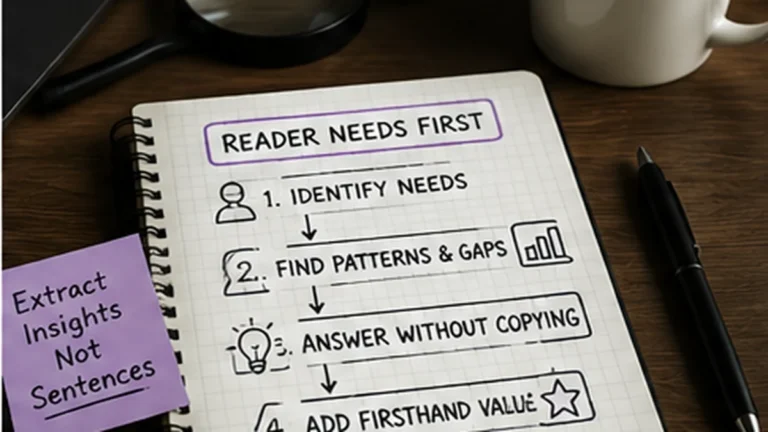
Read experimentCompetitor research should reveal reader needs, not become a template to copy. Use AI to extract patterns, gaps and questions, then add firsthand value.
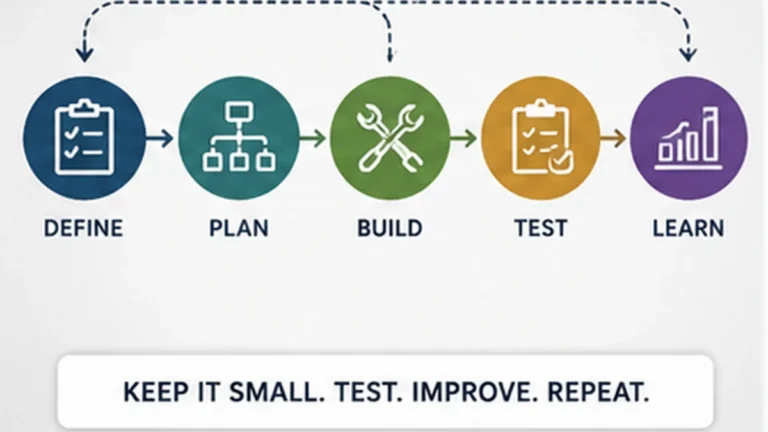
Read experimentStart with the smallest workflow that produces a good result. Add permanent complexity only when a recurring failure proves it is needed.
Read experiment