Quick Answer
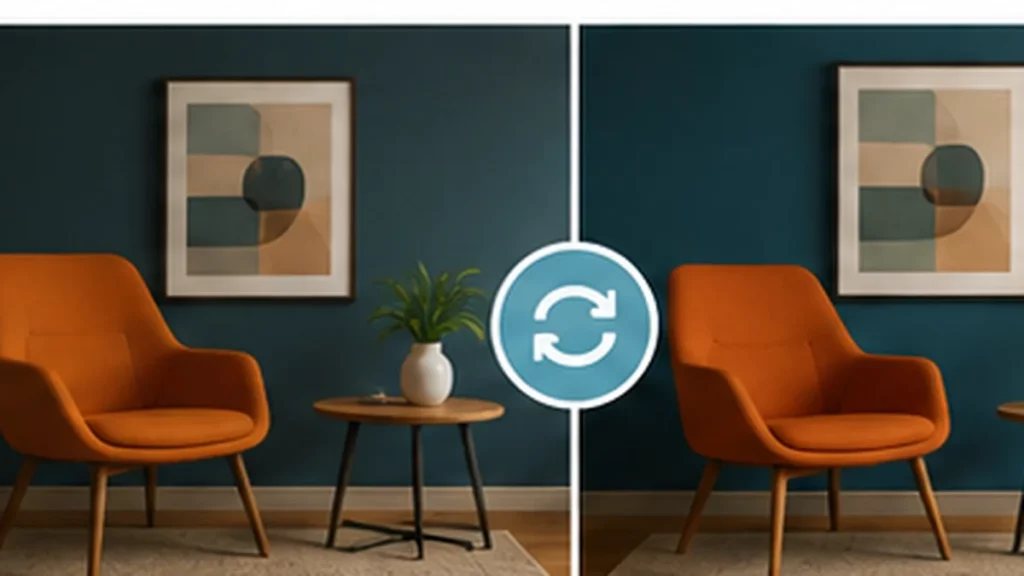
AI image generation is very good at creating a plausible image from a description. It is less dependable when a project requires the exact same physical object to remain unchanged across multiple independently generated views.
We learned this while working with construction-oriented content. A first image could look excellent, but a second image might quietly change the frame, shelf spacing, wheel placement, proportions or hidden structure.
Each individual image could look believable. The set could still be wrong.
Why This Matters More Than Style Consistency
There is an important difference between making images look like they belong together and making them depict the same object.
Matching lighting, color, camera style and environment is mostly a presentation problem.
Object consistency is a structural problem.
If an article teaches someone how to build a cart, cabinet or storage station, the front view, side view and assembly image cannot each depict a slightly different design.
Our Construction Images Exposed the Problem
This became obvious when we tried to use generated visuals as supporting evidence for build articles.
A visually attractive hero image was easy.
The trouble began when later images were expected to show another stage or angle of the same design.
A brace might disappear. A board might move. A bin opening could change size. A support visible in one image might be impossible to reconcile with the next.
The images were not necessarily ugly or obviously artificial. That made the problem harder to notice.
Plausibility Is Not Identity
An image model can satisfy the general concept — “rolling scrap-wood cart” — without preserving the exact identity of the previously generated cart.
That distinction changed our workflow.
We stopped asking only:
“Does this image look right?”
We also asked:
“Is this still the same thing?”
Why Prompting Alone Did Not Fully Solve It
We tried making descriptions more specific.
That helped.
Dimensions, materials, camera direction and locked design details reduced variation, but they did not make independent generations behave like photographs of one real object.
The more exact the article became, the less comfortable we were treating visual similarity as structural proof.
What Worked Better
We had better results when we first locked the physical design in words and treated every image as subordinate to that specification.
The specification could identify dimensions, visible components, attachment points, material thicknesses and details that must not change.
Then every generated image had something concrete to be checked against.
This did not eliminate variation. It made variation easier to detect.
When Consistency Is Less Important
For an inspirational image, decorative scene or conceptual illustration, small physical changes may not matter.
For instructions, comparisons, diagrams or evidence, they can matter a great deal.
The required accuracy should determine how aggressively the images are verified.
Worthy Trying Verdict
Can AI generate convincing individual object images? Yes
Can independent generations silently change the design? Yes
Main risk: Plausible images that do not depict one consistent object
Best defense: Lock the specification first and verify every image against it
Human oversight: High when the image supports physical instructions
The lesson: A matching visual style is not the same as a matching object.