Quick Answer
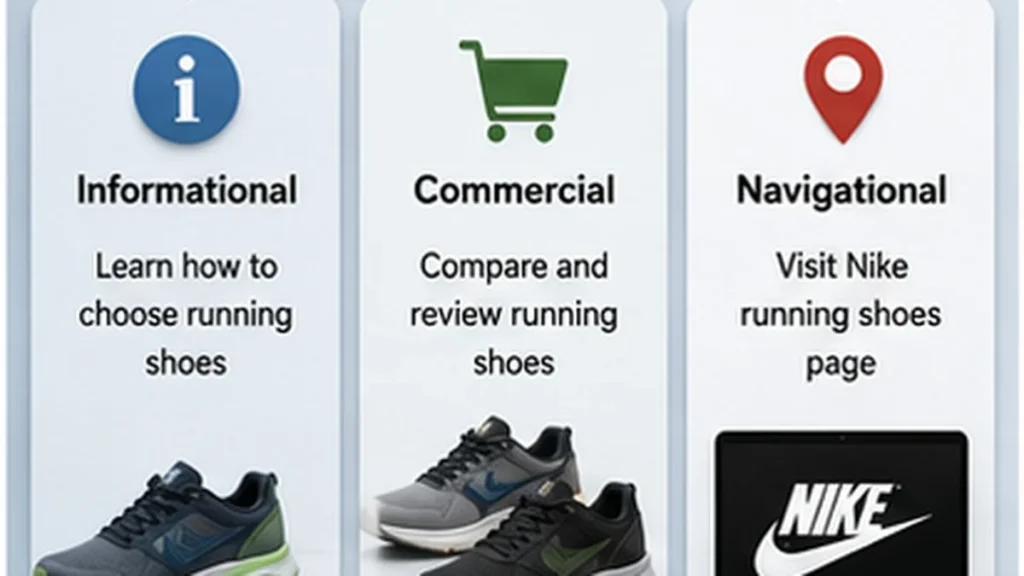
AI can be excellent at analyzing search intent.
For serious SEO work, we prefer giving it current search evidence rather than asking it to infer what today's results probably look like.
Its strongest role is synthesis:
What are searchers trying to accomplish?
What questions recur?
What types of pages are appearing?
Where do results disagree?
What information appears underserved?
That is much stronger than guessing intent from a keyword alone.
A Keyword Does Not Fully Describe Intent
Take:
“AI image consistency.”
The searcher could want a definition, a tutorial, a particular tool, character consistency, product consistency, technical research or help fixing inconsistent generations.
The phrase alone does not resolve all of that.
Current search results provide evidence about how the query is being interpreted in practice.
Why Current Evidence Matters
Search changes.
Products change.
Terminology changes.
Competitors improve.
New features appear.
A perfectly sensible interpretation based on older information may not reflect what a searcher encounters today.
So our preferred sequence is:
search → collect evidence → let AI analyze
rather than:
ask AI what probably ranks → write.
What We Want AI to Extract
Once the evidence exists, AI is very good at pattern recognition across results.
We can ask it to compare:
title patterns;
page types;
questions answered;
common sections;
audience assumptions;
depth;
definitions;
practical steps;
and gaps.
That turns a collection of search results into a working model of reader needs.
Competitors Are Evidence, Not the Specification
This distinction is crucial.
If many ranking pages cover the same subtopic, that is evidence the subject may matter to searchers.
It does not mean we should copy their structure.
The goal is to understand:
“What does the reader need?”
not:
“How do we reproduce the average ranking page?”
Sometimes the strongest opportunity is exactly what the existing results fail to explain.
We Want Firsthand Value on Top of Search Evidence
Search analysis can tell us what the landscape covers.
Our own experience can tell us what the landscape may be missing.
For example, a generic article about AI image consistency might explain prompting techniques.
Our experience adds a different practical distinction: visual style consistency and physical object consistency are not the same problem.
That kind of observation is what can make a page more than a synthesis of competitors.
Search Intent Should Shape Scope Before Writing
This is where we wasted time in older workflows.
If we discover the real intent after drafting, major sections may need to be removed or rewritten.
Researching first helps establish:
what belongs;
what does not;
what the Quick Answer should resolve;
what evidence is required;
what related question deserves its own article;
and what would make our page distinct.
Then writing becomes easier because the article already knows what job it has.
AI Does Not Remove Editorial Judgment
Search results can contain weak pages, outdated pages, filler and content ranking for reasons that are not obvious from the page itself.
AI can summarize that landscape beautifully.
We still decide which patterns reflect genuine reader needs and which ones should not influence the article.
Search intent research is evidence gathering, not obedience to competitors.
SEO Is Also Changing Beyond Traditional Results
Google's Search documentation was updated in 2026 with additional guidance for appearing in generative AI features. Google continues to emphasize established SEO fundamentals while also encouraging non-commodity content and useful supporting media.
That strengthens the case for doing more than reproducing common search-result patterns. Distinct, genuinely useful information remains important even as the presentation of search results evolves.
A Repeatable Research Loop
Our preferred process is straightforward.
Search the current query and close variants.
Identify the dominant page types and obvious intent.
Collect recurring reader questions and important disagreements.
Separate essential coverage from competitor-specific structure.
Identify what our experience or research can add.
Lock the page scope.
Then write.
AI can accelerate almost every analytical step in that loop without being asked to pretend it has current evidence when it does not.
Worthy Trying Verdict
Worked: Yes
Repeatability: High with current evidence
AI strength: Pattern recognition and synthesis
Human oversight: Medium
Time saved: Significant
Would we use AI for search-intent analysis again? Yes
The lesson: Let AI analyze the search landscape instead of asking it to invent one.