Quick Answer
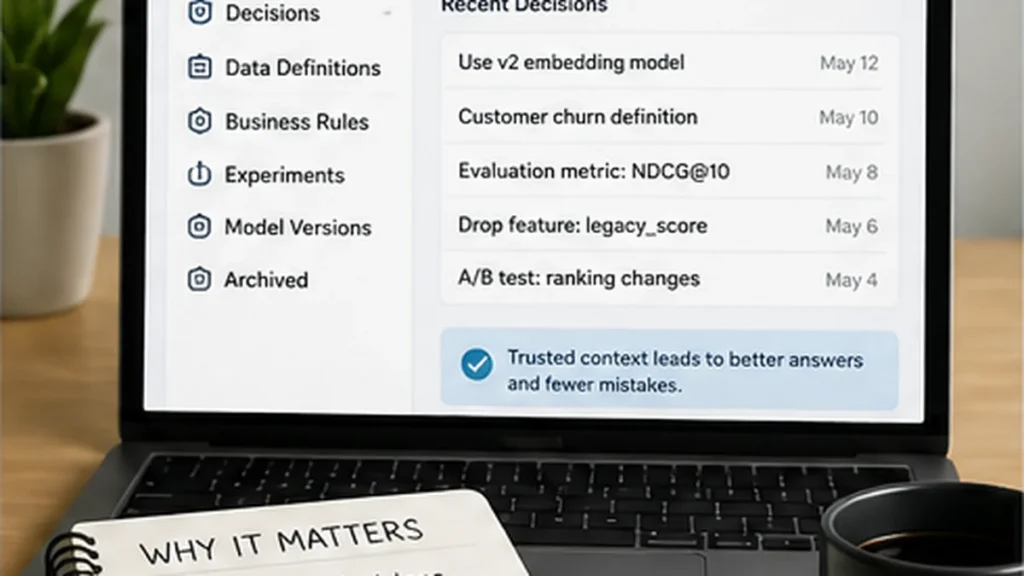
A source of truth is a small, authoritative set of current project decisions that overrides outdated drafts, experiments and abandoned approaches.
Large AI projects become easier when the model does not have to infer which historical instruction still applies.
One of our recurring problems was not lack of information. It was having too much information with different levels of authority.
History and Current Truth Are Different
A project history explains how we got here.
A source of truth explains what is true now.
Those are both valuable, but they serve different purposes.
If an earlier workflow required one process and a later decision replaced it, both may still exist in the history. Production should not have to rediscover the decision every time.
Why “Use the Newest Instruction” Is Not Always Enough
Real project histories are messy.
A newer message may discuss an experiment rather than permanently replace the standard.
A later correction may apply to one article rather than the whole project.
A casual comment can appear newer than a formal decision.
Authority therefore cannot always be inferred from chronology alone.
What Belongs in the Source of Truth
We want it small enough to remain understandable.
Typical contents include:
the project's objective;
current non-negotiable constraints;
locked terminology;
current workflow;
quality standard;
important architecture decisions;
and known limitations that affect production.
It should not contain every conversation that led to those conclusions.
Why Small Matters
If the source of truth becomes another giant archive, it recreates the original problem.
The purpose is prioritization.
A new contributor — human or AI — should be able to read it and understand how the project works now.
Update It When the Project Actually Changes
Not every output correction belongs there.
A source of truth should change when a project-level decision changes.
That keeps it stable enough to be authoritative without becoming stale.
It Also Makes Fresh Starts Safer
Once the important state exists outside one conversation, we can start a new chat, change tools or rebuild part of the workflow without losing the project's identity.
That reduces dependence on conversational continuity.
Worthy Trying Verdict
Value: High
Best for: Long-running, evolving projects
Main benefit: Separates current authority from historical context
Main risk: Letting the source of truth become another archive
The lesson: AI works better on long projects when it can distinguish what the project once tried from what the project currently requires.